December 1999, on to the next decade.
It’s almost Christmas 1988, one more year until the end of the decade, and I am sitting in my home in West Los Angeles in front of a beautifully hand-decorated package my friend Courtney just sent me. I already know what it is. Courtney had just left Los Angeles a few months earlier for her hometown of Portland, Oregon, and was working at a local indie record store. I had just gotten off the phone with her about whether the package arrived.
Usually when we are in different cities we sit on the phone for hours talking about boys, our lives and the Brit Pop Stars she is infatuated with. This phone call was different. This time, she set out to describe a whole new and super exciting music scene she had encountered up in the Northwest. She was so excited that she had sent me some records from her store of these new bands. She had called to verify their arrival. Here they are. Do I wait until Christmas morning or open them now?
It is gloomy outside.
It is gloomy for the Los Angeles music scene as well.
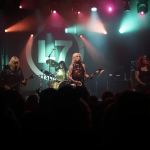
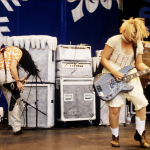
All that was going on in 1988, if you liked alternative music, were a few hard rock bands like L7, the Fiends, the Hangmen, and the Lazy Cowgirls. For the most part, the few small clubs that featured new bands were filled with either cow-punk or country bands or commercial-sounding hard rock groups, hoping to breathe some of the exhaust left behind by Guns N’ Roses’ success. The suburban hardcore/punk scene, which had been so vibrant and active only two years earlier, had almost died out completely. Pay-to-play was the standard just about everywhere, leaving only a few proper clubs to see new bands. All in all, Los Angeles was not the environment to breed a healthy alternative scene. There was just nothing to be excited about. Nothing to feel. To survive as a working musician, many players had to conform to the mainstream crap that the American record labels were cranking out.
I decided to open Courtney’s gift.
Inside were three 12” albums, all local Seattle bands and all on a record label I had never heard of. The artwork struck me first, mostly black-and-white live photos; each one looked Strong, Fluid, Pulsating, and Explosive. The music struck with even more of a bang! The records were: Nirvana’s Bleach, Mudhoney’s Superfuzz Big Muff (glitterhaus release), and Green River’s Rehab Doll. From that moment on, it was clear that the Northwest was where to be and Subpop Records was the label to be on. L7 ventured north to find a place where kindred souls could play and be part of a working music movement that seemed like a genuine alternative to the commercial crap mainstream America was force-feeding.
Jump ahead to News Eve 1990
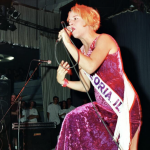
L7 has just played a successful, sold-out New Year’s Eve show at Hollywood’s Club Lingerie. Unfortunately, earlier that evening, I had not paid attention to a “No Parking Sign” and my 1970 Chevy Chevelle was towed and impounded an hour before we took the stage. At the end of the evening, I was stranded, and I asked Eric Earlandson, Courtney’s boyfriend and guitarist for her new band Hole, for a ride to the impound yard. We decided not to get the car until the next day (it wasn’t going anywhere) and instead stayed up all night to watch the first sunrise of the new decade. We proceeded to a cool spot I knew of in the Hollywood Hills, where we had a view of the entire city, all the way to the Pacific Ocean. We hadn’t drunk all night; to do so would have jeopardized my chances of getting my car out of the yard and increased our chances of being busted for drunk driving. We talked instead. We talked about the upcoming decade, how great it is that L7 could sell out the 400-capacity club we had played earlier that evening, and how that never would have happened just two short years ago. We talked about how great it was that Los Angeles was really picking up as a place we could live and play music (the weather in Seattle and Portland sucks). It seemed to us that finally, enough people in LA were interested in alternative music to support a couple of great indie labels (Sympathy for the Record Industry being one example) an all ages club (jabber jaw) a local commercial free radio station (KXLU) and even a couple of local fanzines (Ben is Dead, etc) We discussed Sub Pop and how bands like ours should take over the pathetic major labels, the stupid commercial radio stations and the dumb-ass rock press. We thought how great it would be if only bands like Mudhoney, the Fluid, Fugasi, Nirvana, the Fastbacks, Pussy Galore, Sound Garden, Tad, the Cows, Dinosaur Jr., Babes in Toyland. Of course, our own bands, Hole and L7, could take over the commercial ranks from dorky bands like Motley Crue, Guns N Roses, Poison, and Vixen. We talked about change not just in music but also in politics, for women, and for society in general. We hoped everything would be different in the 90s.
Our discussions continued i throughout the night and we sat silent, watching the rising sun. Once up, it was too bright and uncomfortable to stay outside. On the way to the tow yard, we stopped at El Compadre, a Mexican restaurant on Sunset Boulevard, for breakfast. We collapsed into our booth and hadn’t been there for even a minute when Eric looked at me signally to check out the table behind us. I casually turned around to see both Slash and Axel of Guns N’ Roses eating tortillas. We both started laughing. To this day, I wonder what they talked about, if anything, how they felt about the decade to come, if anything.
The following 7 years were mad. L7 went from selling out 400-seat venues to selling out 4,000-seat venues and beyond. We played 40,000-capacity and up festivals, and it seemed all our friends from the Northwest were being signed to major deals, playing major tours, and becoming major players. Record companies were running scared, realizing they had not foreseen the coming tidal wave. Young go-getters in every aspect of the music business, from fanzines to street marketing teams, moved in for the kill. Some put together their own companies, but the majors hired most to infuse new blood into the old system. It seemed now that middle America was over with their cheesy crock of watered-down rock that craved retarded intelligence, decadence, and general stupidity. It felt like the constraints had been broken, and almost anything goes! Even the Melvins were signed to a major label record deal, for God’s sake! But not just for the music scene, Americans, after almost two decades of passive behavior, came out in droves to elect a new, young democratic president, support long-ignored social issues, like race, women’s rights, and gay issues. These same people began to buy music that seemed almost in opposition to what self-indulgent 80s music was all about. This was also reflected in the musicians themselves, who had become interested in supporting political issues, donating their time to benefit concerts, and exploring alternative ways to sell records. Concert series like Lalapalooza proved that a collective of music, art, and politics could coexist under one ticket price, and lots of people, normal American people, would show up. Things really seemed to be changing, for the better.
It’s almost Christmas 1998.
I sit silently on the phone as Courtney tells me her version of the latest news about the systematic shutdown and merger of 7 major record labels into one label. This decision is greatly inconveniencing both of us. Both of us girls have records to release and work to do. During the rise of bands like ours, we both decided to move to major labels to expose our band better and became reliant on the major-label system, which was supposedly designed to accommodate the significant changes made in the 90s. Rumors had been flying around for almost 6 months about the possibility of 7,000 people from these labels losing their jobs and 800 bands being dropped. Any of our friends from our scene who had gotten jobs at the major labels in 1992 were already out of work, and major commercial radio stations had since gone back to playing the “Same 20 Bands” over and over again. No more Lalapalooza, no more charity events and concerts, the Clinton backlash is overly apparent, and morality is popping up on political agendas once again. It seems that once again bands are being fronted by aggressive, middle-class white boys, playing middle-of-the-road, watered-down music and using women’s body parts to escalate their sales. Pay-to-play is even making its way back into the LA norm. It almost seems that what happened through the early 90s was no more than a fluke, a glitch in the tape.
It is gloomy outside, it is bleak for music, it is just gloomy.
Of course its not all bad, if there is one thing I learned over the past decade is that when one movement rises to a boil there is still another simmering underneath. And just as Motley Crue makes its comeback, another, even more exciting underground movement will begin its journey.
This New Year’s, I will be in the high desert just outside Joshua Tree with my bandmates in OtherStarPeople and 80 or so of our friends, most of whom are local Los Angeles musicians. There will be a stage set up with a PA, and when the last sun of the 1990s sets, we will all play music for each other, eat, shoot off fireworks, and talk about music in the decade to come.
We will watch the first sunrise of this new decade together.